Why free SMS verification websites rarely work
Free SMS verification websites print your code on a public page and recycle numbers that platforms already block. When they're fine, and what they cost you.
4 min read
You found a site with a grid of flags, picked a UK number, typed it into the app and refreshed the inbox page for ten minutes. Either nothing came, or codes came for other people's Telegram and Tinder sign-ups and yours wasn't among them. Both results come from the way these sites are built.
Anyone with the link can read your code
A free SMS site publishes a short list of numbers and prints every message they receive on a web page. Nobody logs in to see it. The page you're refreshing is the page every other visitor sees, and it keeps the history after you've closed the tab.
Most verification texts name the app they came from, which turns that page into a public record of which numbers were used on which apps. Anyone reading it can ask the same app for a fresh code to the same number and read it off the same page. On apps that log you in with a phone number and a code, that is the whole login. Two-factor by SMS on a public number protects nothing, since the second factor is printed on a website.
Burned
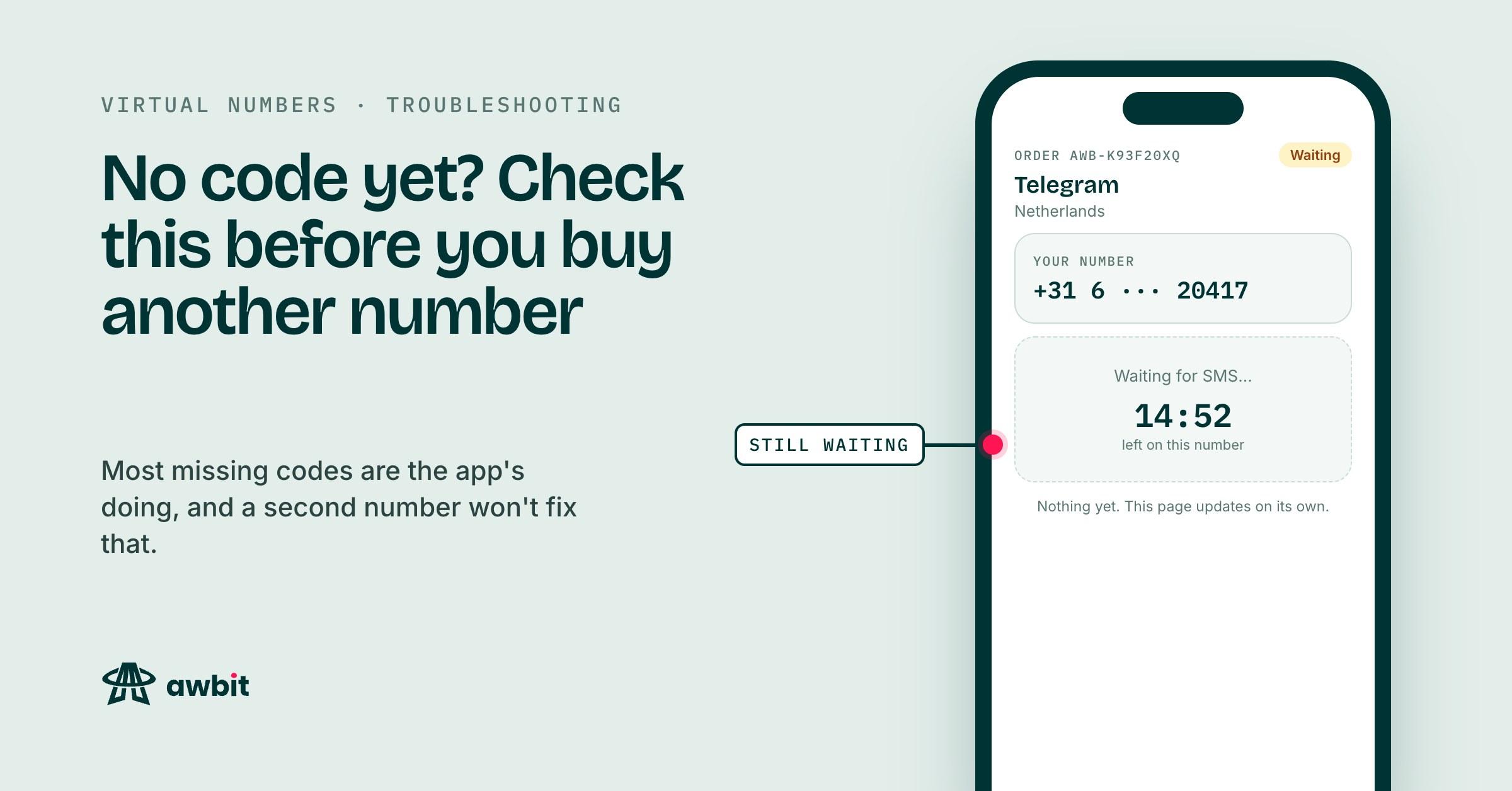
Free sites recycle the same public numbers until the platforms block them, and plenty keep listing a number long after it stopped working. Platforms notice when one number has opened account after account. Some refuse it on the spot. Others accept it and never send a code, and on your screen that looks exactly like a slow network until you've waited long enough to know better.
You can also find that the number already has an account on the app you want, because someone got there first. Depending on the app, that means an error, or a code that opens the stranger's account when you meant to create your own. Whoever visits after you can do the same with yours.
So what a free number mostly costs is time. You refresh, you wait, you try the Netherlands, you try Sweden, and an hour later you're where you started.
Account recovery
The bigger bill arrives later. Many apps that check your phone number at sign-up also use it to reset your password. A number on a free site never belonged to you, and it stays public after you leave. Whoever reads that inbox a month from now can request a reset code for your account and pick it up from the same page.
Platforms also come back on their own. Some ask an account to confirm its phone number again after a login from a new device or a burst of activity they don't like. A number from a free site may not be listed any more by then, and if it is, you're in a race with every other visitor for the code.
An account built on a public number is as private as a web page anybody can open. If it holds your photos or a saved payment card, that is what's sitting behind the public inbox.
If you've already used one
Go into that account's settings today and change the phone number to one you control. While you're there, add an authenticator app or an email address for two-factor, and take the public number out of the recovery options. If the app won't let you change the number, treat the account as one a stranger could open any day, and move anything you care about off it.
Fine for throwaways
Free sites are fine when losing the account would cost you nothing. A forum that wants a phone number before it shows you one thread. An app you want to look inside once before deciding it isn't for you. If you'd shrug when a stranger took it over, the public inbox doesn't matter.
Keep that account empty. Give it a password you use nowhere else and leave your real name out of it. Expect to try a few numbers before one works. Whatever number you use, the app's rules on phone numbers and extra accounts sit in its own terms, and reading them is on you.
Paying for a number
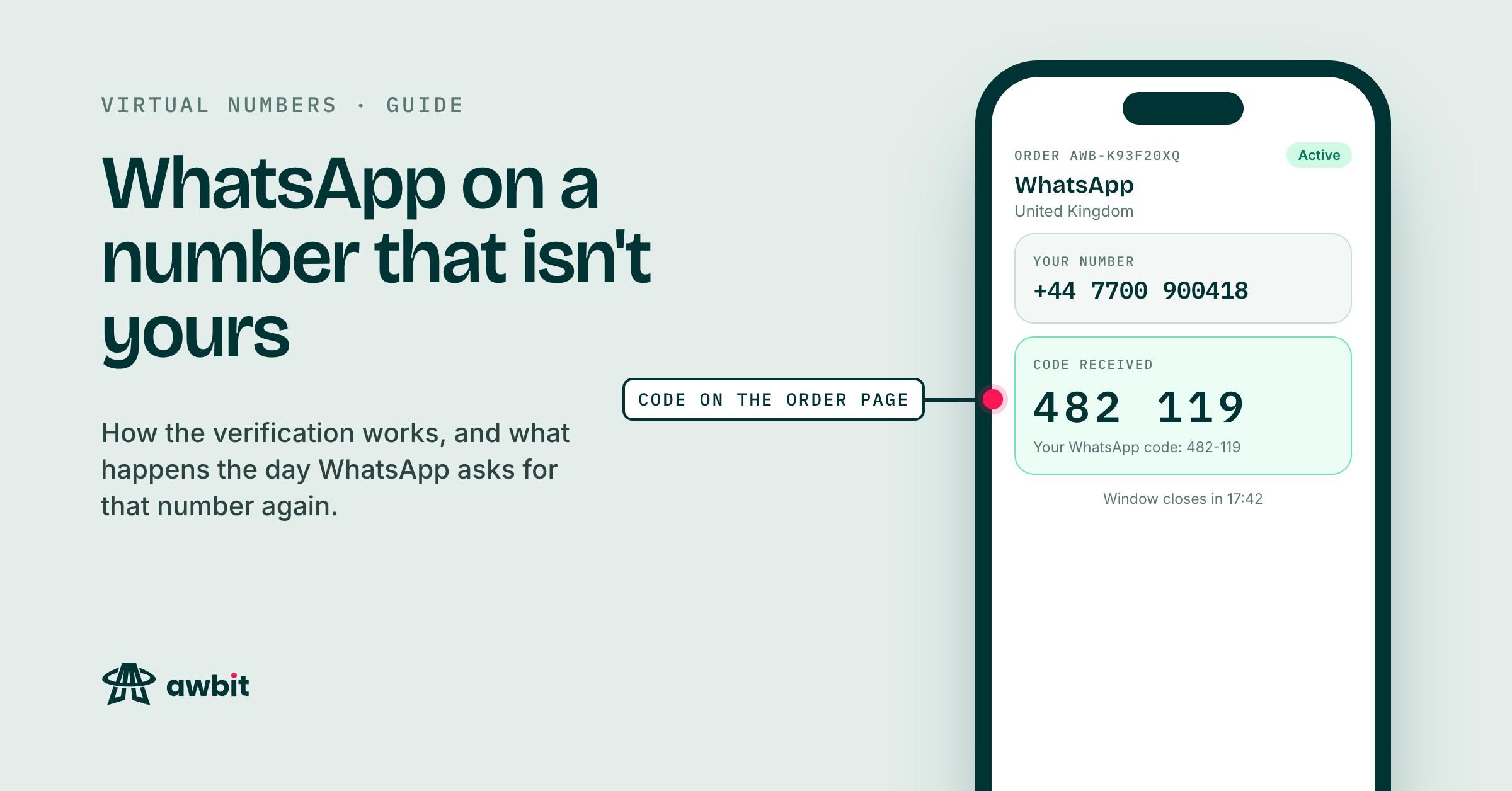
A paid virtual number on Awbit fixes the public part. The number serves only your order, and its SMS shows on an order page inside your account. We buy from the live stock of several upstream suppliers instead of keeping a pool of our own, and when one supplier has nothing for a service, another often still does. The naira price shows before you confirm. If the window closes with no code, we cancel the number and the charge goes back to your wallet, except when the carrier rejects that cancel. Those orders are settled by hand, and the refund policy covers how.
| Free SMS site | Virtual number on Awbit | A second SIM in your name | |
|---|---|---|---|
| Where the code shows | A public page anyone can open | Your order page, inside your account | Your phone |
| What it costs | Nothing | The naira price shown before you confirm | A SIM and a trip to register it |
| If no code comes | Nothing to refund | The charge goes back to your wallet, apart from the odd order a carrier won't cancel, which we settle by hand | You still own the SIM |
| A year later | Public, and probably blocked | Back with the carrier | Still yours while you keep it in use |
A number from us shares one weakness with a free one. When the window closes, ours goes back to the carrier too, and the recovery problem above applies to any account you leave on it. We don't rent numbers by the day or week. An account you plan to keep for years belongs on a SIM registered in your name.