Airtime and data for staff, plus the shop's bills, from one wallet
How a small business can buy staff airtime and data, router top-ups and the shop's light and TV bills from one prepaid naira wallet, with every receipt kept.
4 min read
Monday morning, four staff each want ₦1,000 on their lines, and the router has been quiet since Saturday afternoon. By month end the receipts are forty screenshots in a WhatsApp chat, and your bookkeeper is scrolling through them with a calculator.
Awbit is a prepaid naira wallet, and its Airtime & bills section covers most of what a small shop pays for from a phone: airtime and data on MTN, Glo, Airtel and 9mobile, Spectranet and Smile router data, prepaid electricity, and DSTV, GOtv, Startimes and Showmax. Some of what a shop wants, it doesn't do. Those parts are below with the rest.
Save each line once
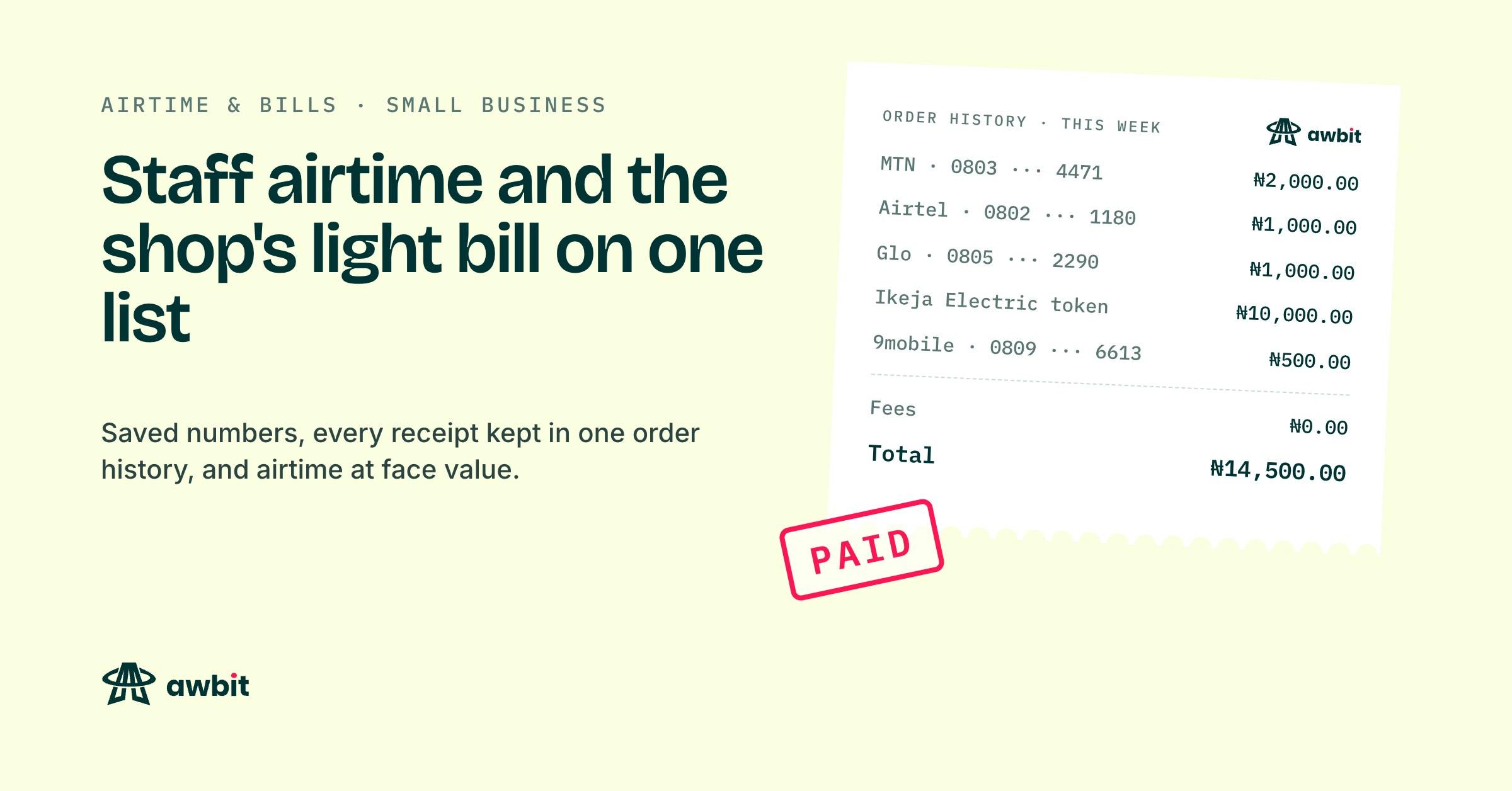
Pick the network, type the number, choose an amount or a data plan, and pay. ₦1,000 of airtime costs ₦1,000, and data and bills sell at face value the same way. There are no extra fees on top, so the total on the confirm screen is what leaves the wallet.
After the first top-up the number is saved. Next Monday you pick Tunde's line from the list instead of asking him to send it again, and you stop retyping eleven digits from a WhatsApp message.
Each line is still its own order. There is no bulk option where you paste in six numbers and pay once, so six staff means six orders, each with its own receipt. On a Monday morning with six people waiting, that is slower.
Router data
Spectranet and Smile are on the same list, for the router in the shop or the backup one at home. They come out of the same balance, and the receipt goes into the same order history as the staff airtime, so the internet bill stops living in a separate app.
Before the shop's light goes off
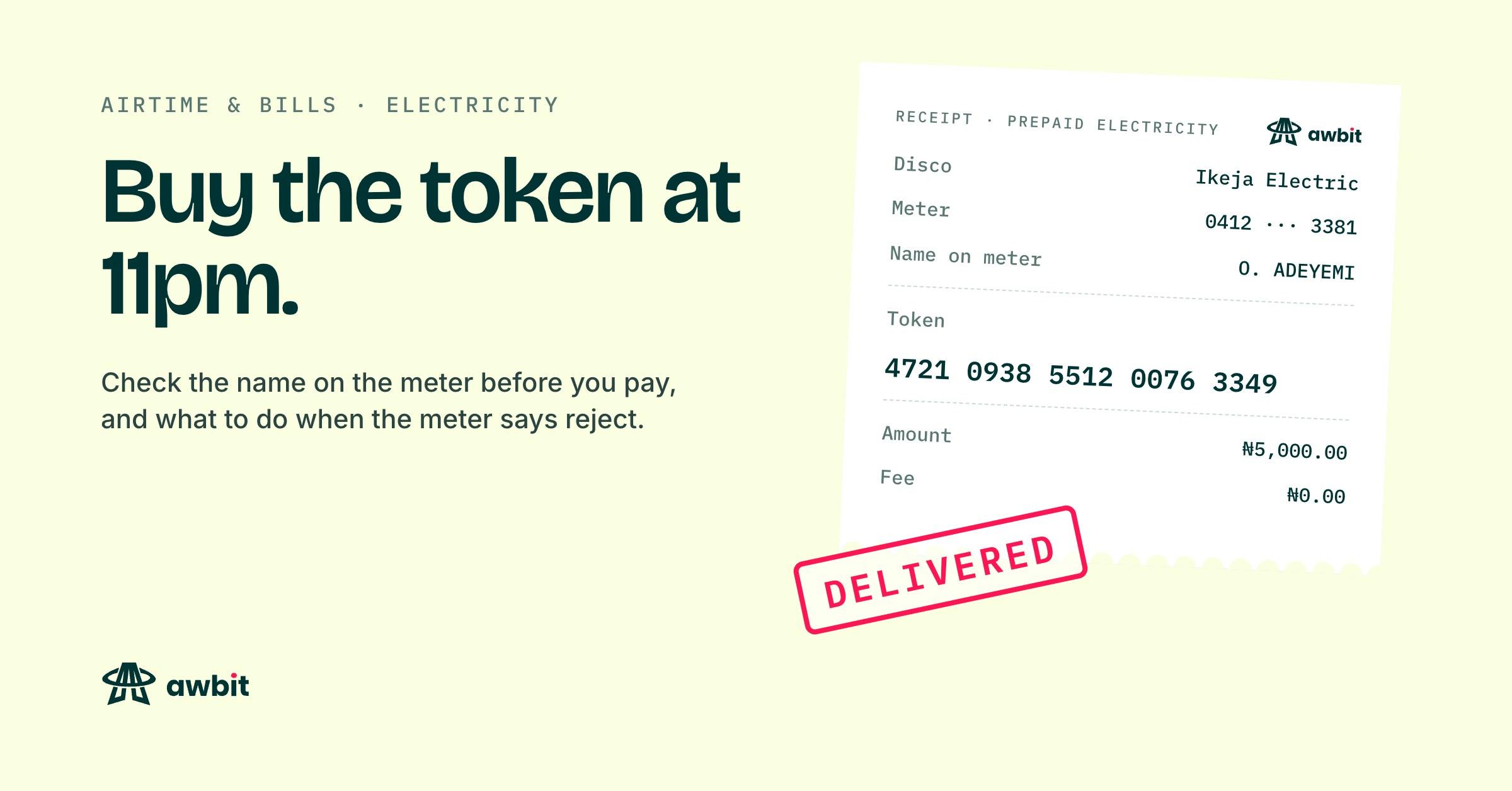
Prepaid electricity covers six discos: Ikeja Electric, Eko Electric, Abuja Electric, Ibadan Electric, PHED and Kaduna Electric. Awbit checks the meter number with the disco, and the account holder's name comes back before any money leaves the wallet. If the name isn't the one on the shop's last receipt, back out. The token lands on your receipt as soon as the disco responds.
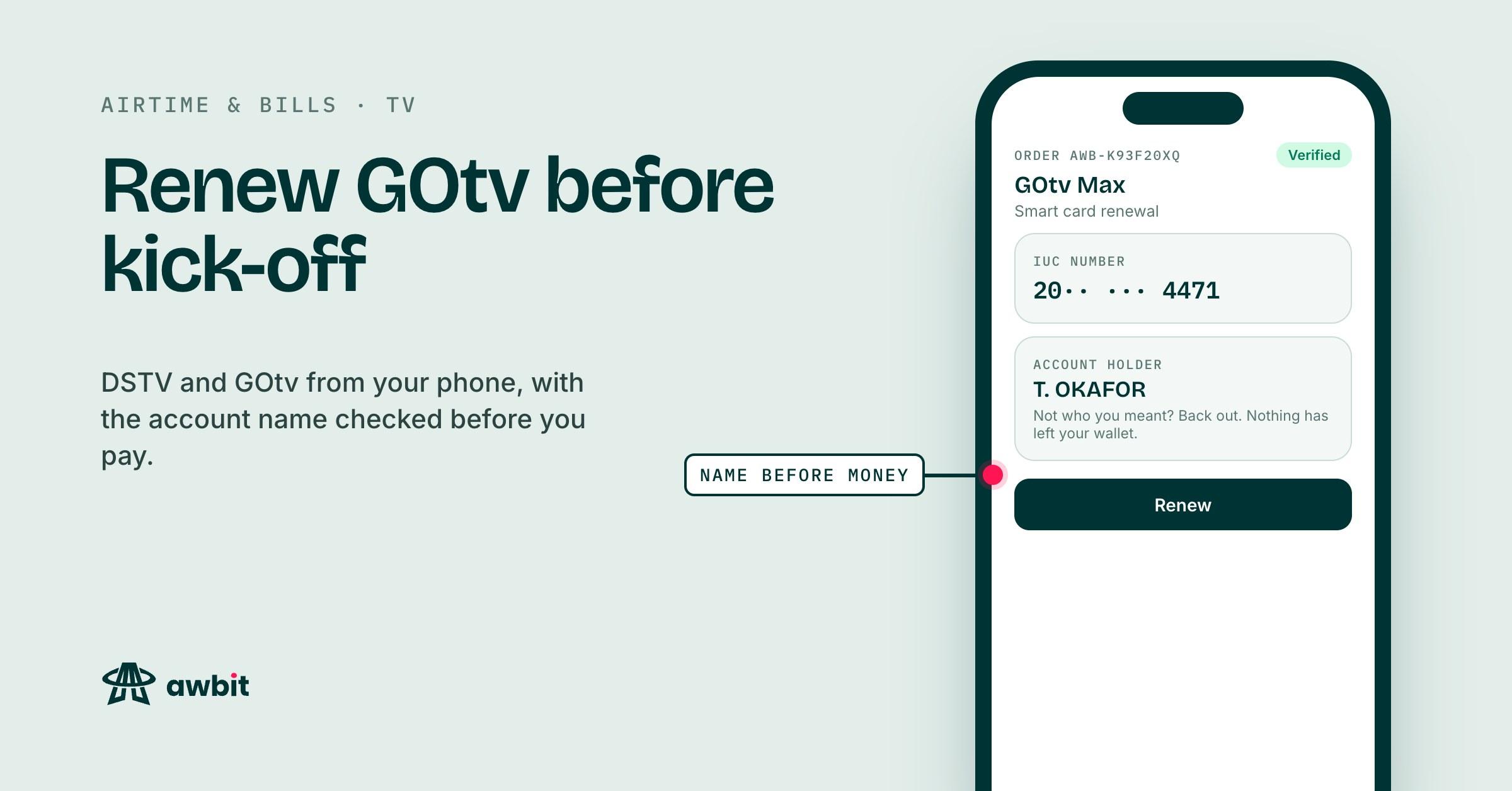
The TV in the waiting area works the same way. DSTV, GOtv, Startimes and Showmax renew from the same list. The smart card number is checked by name before you pay, and the card is saved after the first renewal. For TV packages bought on Awbit, a reminder email goes out about a day before the 30-day cycle ends, counted from the day you paid here. It can't see renewals made anywhere else, so if someone paid for it another way that month, ignore the email.
What your bookkeeper sees
Every top-up and renewal stays in your order history for good, each under its own order number starting AWB-. The transaction history in the wallet lists every deposit, purchase, refund and bonus. Each line carries a reference and shows the balance after it, and deposits carry their own DEP reference. A failed order that reversed shows up as a credit against the same order number, so a refund doesn't look like money that appeared from nowhere.
There is no export button. You won't find a CSV download or a monthly statement file, so month end means reading the history on screen or taking screenshots of it.
Nobody else gets a login
An Awbit account belongs to one person. You sign up with an email and a password and confirm a 6-digit code sent to that email. There are no staff logins or per-person spending limits. Whoever has the password can spend the whole balance and read the whole order history, so your bookkeeper either sits with you at month end or works from what you show them.
Two habits help. Register with an email address the business controls, at awbit.io/auth/register, so the TV reminders and anything support sends land in an inbox that outlives any one employee. And keep the balance close to what the week needs. The account is free and nothing leaves the wallet until you buy something, so there is no reason to park a quarter's budget in it.
Typed one digit wrong?
Meter and smart card numbers are checked against a name. Phone numbers aren't. Airtime goes to exactly the number you type, and a delivered top-up can't be recalled. If you send Tunde's ₦1,000 to 0803 instead of 0806, it is on a stranger's phone, and Awbit can't fetch it back. Read the number back before you pay, and pick from the saved list where you can.
A top-up that fails is a different case. If the network or the biller rejects it, the charge goes back to your wallet and the credit shows in your transaction history against that order number. An order that got stuck before it ever reached the provider is caught by Awbit's regular re-check, which runs every few minutes, and refunded the same way.
Getting money out again
Wallet money is meant to be spent on the platform. If you want an unspent balance back in the bank, write to support from the email the account is registered with. The refund policy says returns go to the payment method that funded the wallet and may take 3 to 10 business days depending on the processor. They also go through identity and anti-fraud checks, and any processor fees already incurred may be deducted from what comes back.