Gift card scams to know before you buy a code from anyone
Gift card scams to know before you buy a code: vendors who vanish after payment, used or wrong-region codes, fake receipts and pay-in-gift-cards demands.
4 min read
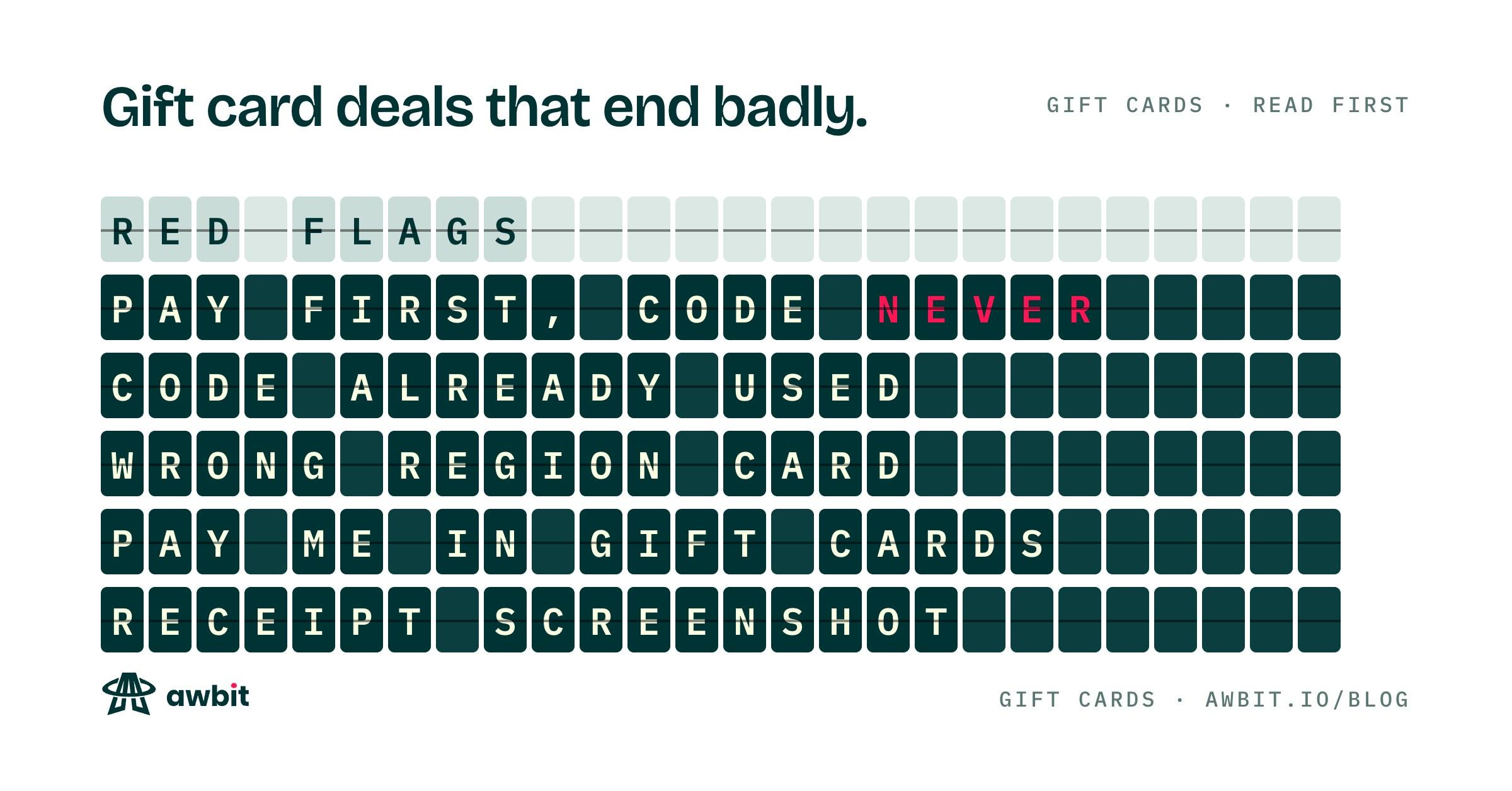
A vendor on Instagram has a $100 Steam code going for less than the rate everyone else is quoting, and he wants the transfer before he sends anything. Some vendors like him are fine. The ones who aren't run the same handful of tricks, whether they find you on WhatsApp or on X, and every one of them depends on you paying before you can see what you're paying for.
He takes the transfer and goes quiet
The plain version needs no skill. You send money to a personal account and the code never comes. He tells you it's processing until the day he blocks you.
The patient version takes longer. He delivers your first two small orders on time and disappears on the big one. The feedback screenshots on his page can come from his friends or from an image editor, and you have no way to tell which. A bank transfer to a stranger is hard to pull back once it lands. Reporting it to your bank is worth doing, and it doesn't mean the money returns.
Codes somebody already spent
A gift card code works like a password for money, and nothing stops a seller sending the same code to five buyers. Whoever redeems it first gets the balance. Everyone after that is told the code has already been used, and the seller says it was fine when he sent it.
Partly used cards are a different trap. Codes that load into an account, like Apple, Google Play, Steam or PlayStation, move their whole value into that account at redemption. A code like that is either full or already empty. Cards spent directly by their number and PIN, like prepaid Visa cards and some store cards, can be part-spent and still look valid. You can't check the balance on either kind without the code, and he won't give you the code until you've paid.
If the card is for another country
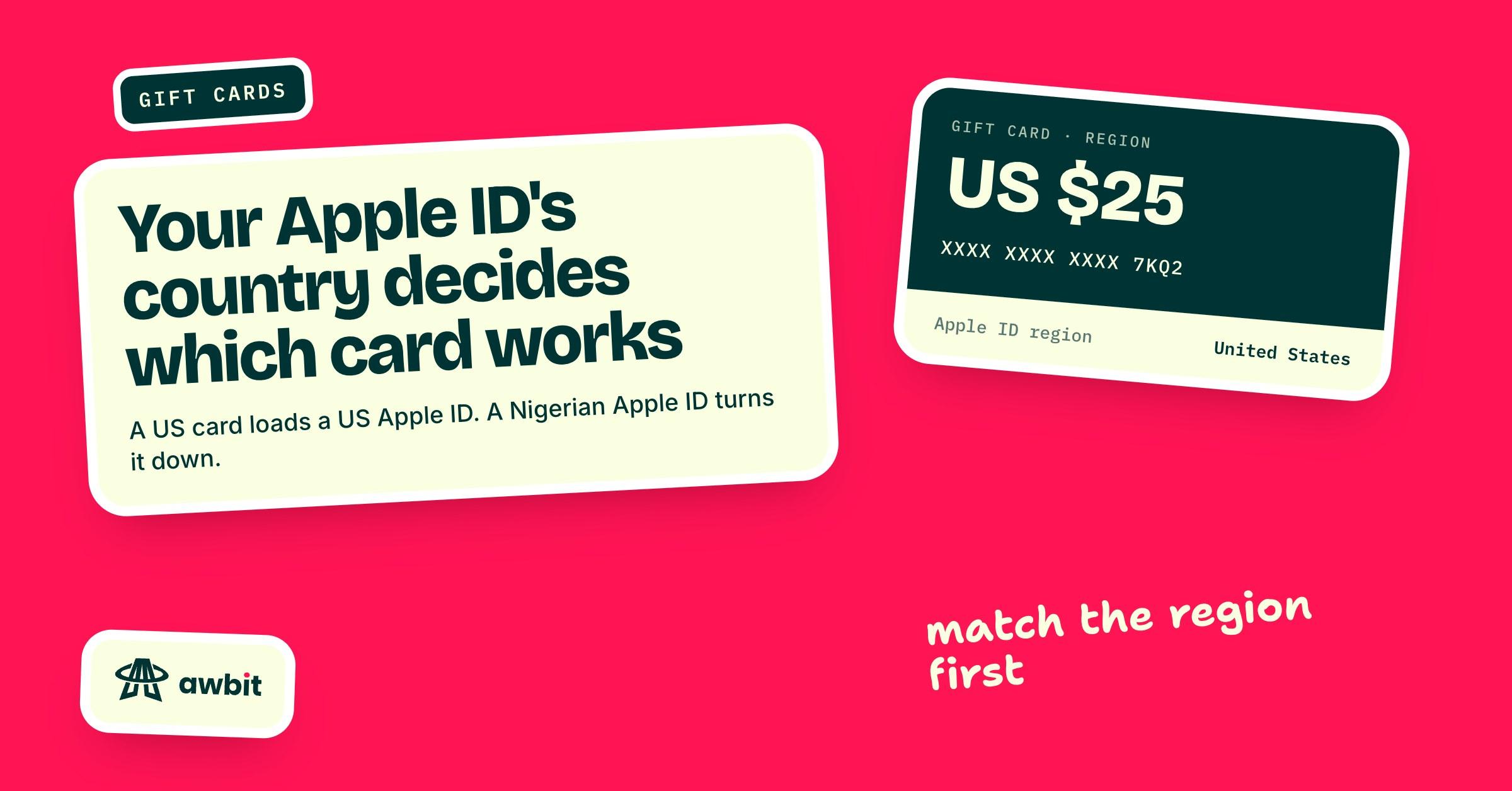
Gift cards are tied to the country they were issued for. A US Amazon card works on a US Amazon account and gets rejected on a UK one. Apple's cards redeem only in the country or region where they were bought. A seller sitting on a pile of UK cards will tell you they work everywhere. The code is real and useless on your account, and when you complain he points out that it works.
Is a receipt screenshot proof?
A photo of a card beside a store receipt shows that somebody bought a card once. It says nothing about whether that code was redeemed an hour later, or sold to four other people since. A screenshot of a balance-check page is a picture, and pictures can be edited.
The trick also runs the other way. If you ever sell a code, the buyer's proof of payment can be an edited bank alert. Open your own bank app and see the money there before you send anything.
When someone asks you to pay in gift cards
The US Federal Trade Commission tells consumers plainly that a demand to pay by gift card is a scam, whoever is making it. Apple says the same of its own cards, which are for Apple purchases only.
The Nigerian versions arrive as a customs fee on a parcel you never ordered, or as a partner abroad you've never met in person who needs an iTunes card for an emergency. Anyone who wants you to read a code out over the phone has chosen the one payment method that can't be reversed.
That includes a card bought on Awbit. If someone tells you to buy an Apple card here and send them the code, the order goes through like any other order, and once you reveal the code it's final.
Buying from the issuer's stock
On Awbit, the code comes out of the issuer's inventory into an account only you can log into. Here's how that lines up against the tricks above.
| The trick | What happens on Awbit |
|---|---|
| Pay a stranger first, then wait | You pay from your own naira wallet. If the order fails before a code is issued, the money is back in your wallet. |
| A code someone already spent | Every order is confirmed with the brand before it completes. |
| A card for the wrong country | Every product says which region its card is for, before you pay. |
| A screenshot as proof | The code is revealed inside your account and never travels through WhatsApp or email. |
The code, and the PIN if the card has one, sits on your order page behind a copy button. It stays in your order history for good. A card you bought in March can be opened and copied again in June. The Gift cards page lists the brands, and the refund policy sets out what is and isn't refundable.
Check the region and value before you pay
A revealed code can't be handed back, which is the issuer's rule everywhere and ours too. Anyone holding it can spend it. Paste it into a chat for someone to redeem on your behalf and it belongs to them. A card bought for the wrong region is final once revealed, and the region was on the product page before you paid.
Stock moves as well. A brand or a particular value can be out for a while, and the catalogue only lists what you can buy at that moment. Most major-brand codes don't expire, but some regional cards carry an expiry date, and the product page says so. Read it before you buy a card you plan to sit on.